
Type II Good
Old man strength, delight of misery & the soul-crushing weight of showing up

Type II Fun
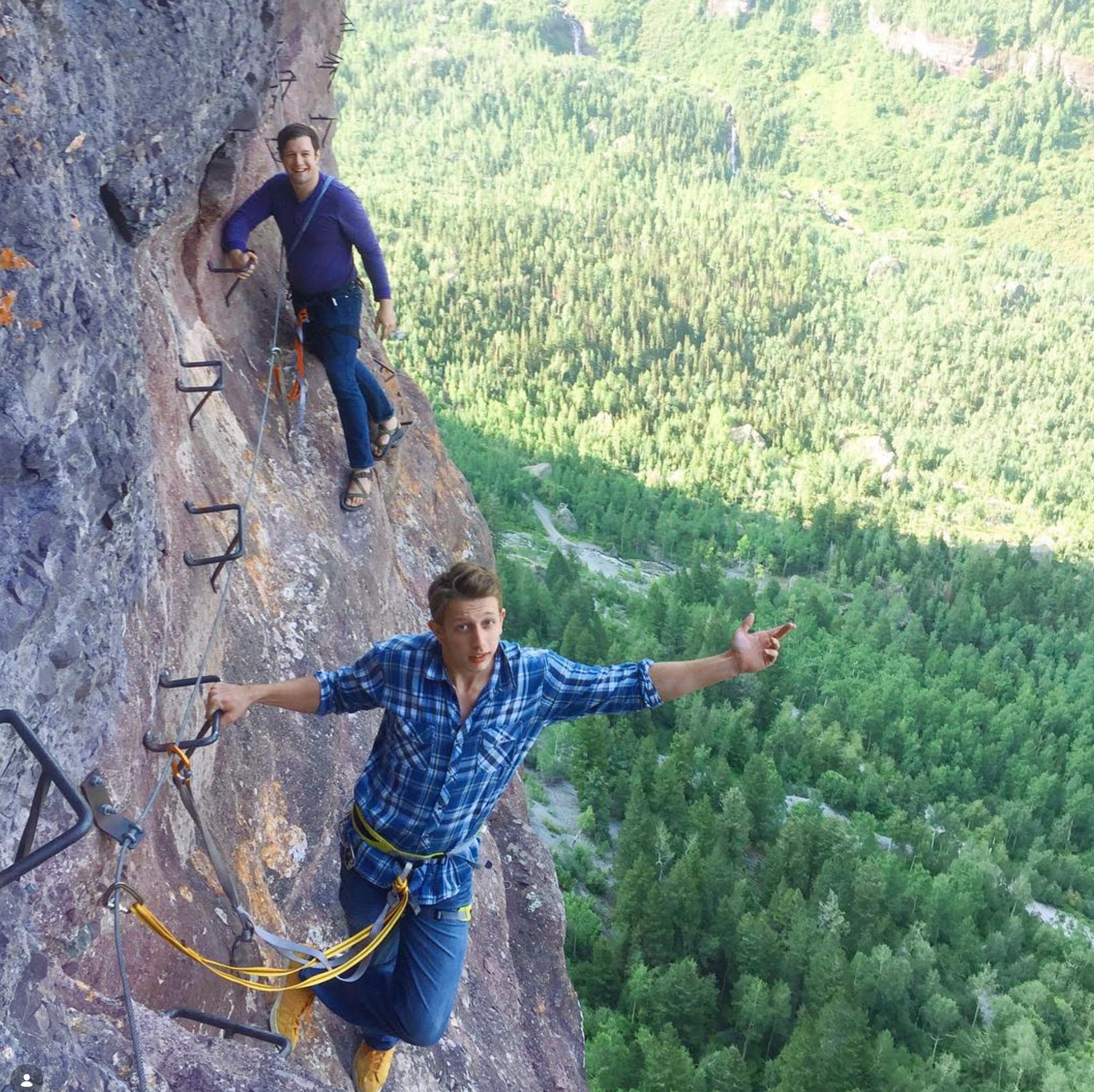
Every time I hike a fourteen-thousand-foot mountain, I get altitude sick and swear it’s the last one.
I’ve done twenty of them.
One of them I’ve done at least five times.
The same thing happens with the ocean. I get sick, swear it off, and then go back.
I think all the sickness has to do with my inner ear.
So why do I do it?
It’s something known by outdoor enthusiasts as Type II Fun: things that are partially miserable while they’re happening, but fun in retrospect.
Here’s the breakdown.
Type I Fun: Fun in the moment, and fun to look back on.
What most people think of as fun.
Type II Fun: Can be unpleasant to downright miserable in the moment, but fun to reflect on later, and often a growing experience.
When you wonder why people put themselves in terrible situations, how anyone can enjoy waking up early to suffer in the wilderness, the answer is easy; they don’t enjoy it. At least not when it’s happening.
I had a friend, Josh, who had this term he called ‘old-man strength.’ When you get older, the people with the best stories didn’t just have fun; they had the type of fun that was mixed with suffering. And while the term is ‘man’ for me, there’s no reason it has to be gendered.
You could also have ‘old-woman strength,’ but I digress. The point is, I’ve found this to be true; I don’t know the stories of my grandfather’s easiest, happiest days, but I do know some WWII stories he left.
And I hope that I instill some of the virtues of Type II Fun in my kids; I want them to have stories worth telling, which are memories worth sharing with others that they can enjoy too.
Type II Good
Then I realized there’s a similar dynamic when it comes to good.
Type I Good: Feels good in the moment, and is good in the moment.
Type II Good: Can be unpleasant to downright miserable in the moment, but meaningful to reflect on later, and often a growing experience.
Type I Good includes the sort of TikTok trend where you ask a poor person for a dollar, they give you their last dollar, and then you take them on a shopping spree.
No doubt they benefit from it and you feel great about it. But when the day ends, its influence often ends too. Handing out money, while not the evil some assume it is, is sometimes used to assuage the guilt for the less easy good we know we could be doing.
I think more people need to show up for more Type II Good. Showing up to a council meeting, hosting a get-together with neighbors, doing something without permission. I see Type II Good coming in three varieties: boring, risky, and inconvenient. Let’s break them down.
Boring Good
I came up with this entire concept while sitting in a city council meeting.
I had gone to so many that night that, looking at the agenda, I could guess about 90 percent of what the councilors were going to say before they said it. There had to be a better use of my time. I almost made a beeline for the exit during the recess when the Deputy Chief of the police department called someone over.
It was the Assistant Chief, whose new detail includes special operations that cover pedestrian and cyclist safety. The Deputy Chief introduced us because of an email I had sent a few weeks earlier, and then he started talking me up.
He said his wife had shown him my videos (you’ve been knowing about my stuff?). He wanted me to meet the Assistant Chief because his detail includes pedestrian safety. The idea is that I could come in and help police better understand how to report unsafe intersections, and how to write reports that don’t simply blame pedestrians (or drivers), but instead help move toward safer conditions.
To educate them on street treatments so they don’t look down on them, and actually understand the point. This could end up being huge. And it happened because I sent one uncomfortable email, and because I showed up to an incredibly boring city council meeting a hundred thousand times (approximately).
Risky Good
I’ve talked about this before, but I like the idea of James C. Scott’s anarchist calisthenics. If we want to be capable of making the right decisions when the stakes are high, we need to work out the moral muscle by breaking dumb laws now.
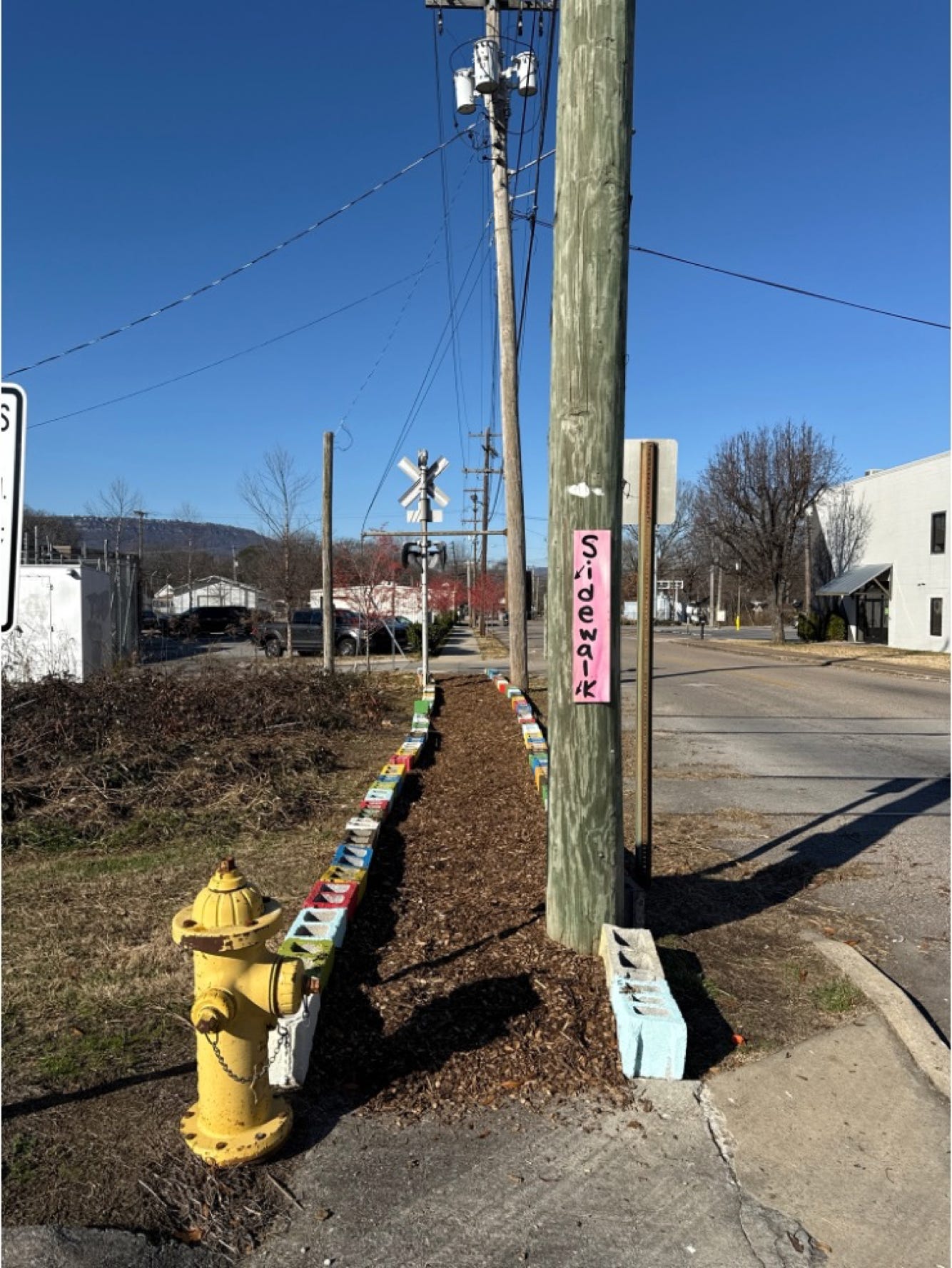
But risky good isn’t as risky as you think. I have friends painting crosswalks, clearing sidewalks, building benches, creating pathways, and rarely do they get questioned except out of curiosity; and those questions are often followed up with praise.
Risky good is Type II because our nervous system tells us there’s a better way for someone else to do it, so we should let someone else. That we just need to make time to figure out the right way.
But our ambitions get assuaged up by bureaucracy, and the doubt monster gets fed until we decide either we can’t or shouldn’t be the ones to do something. But when you take little risks, and get little wins, the good that comes after the deed makes it worth the risk.
Even when the projects are small, and seemingly insignificant, they act as little bat-signals of hope that one person is watching, caring, and thinking about someone else’s needs.
Inconvenient Good
Inconvenient good is the one I’m most unlikely to discuss because I prefer to address the systems that make them inconvenient. We used to know our neighbors not out of intention, but because of necessity. Not the type of necessity that comes from desperation, though I know those relationships exist, but because we lived in a world where random encounters happened naturally.
You didn’t choose a grocery store, you went to the grocery store. Before our environs were built for isolation it wasn’t hard to know your neighbor; it was hard to avoid knowing them. But I digress because, you know what, it is inconvenient.
My most popular post on this platform was that community is easy in the right built environment, but we don’t have that. That’s why the work of Graham McBain (Hey Neighbor) is critical at this juncture; how do we create a software update (culture and community) that might force a hardware update (livable, walkable neighborhoods).
I don’t know what this looks like exactly, but I do know this is the hardest thing for me to do as an introvert. But it looks like:
Making small talk to build acquaintances. You don’t have to be BFFs, but a broader group of people who know your name, and whose names you know, is the real foundation of community.
Closing down the street for a hangout or block party. Ugh, I hate administrative work and processes.
Inviting neighbors over for dinner
Hosting a front yard hang or organizing an event (this is where Graham has a system down)
Compared to the boring and risky versions of Type II Good, this is the one I struggle with the most. But it’s also the one which, when it happens, means the most in retrospect. Because of it my kids have neighborhood friends, we’ve been in people’s lives in hard situations, and they’ve been there for us.
Type II is for you
It’s not particularly fun, or particularly hard, but it is often inconvenient, boring, and scary. But it’s the work which, when we do it, pays off. And not just with mushy warm feelings (those are sometimes there) but with real results and real relationships.
Love this concept and finally gives a name to something my partner frequently says to me, "you don't like doing things, you like 'having done' things." Type 2 fun and work is much easier to say!
Fantastic article, always love your work and insight!